In this post, we will see the book Infinite Series Ramifications by G. M. Fichtenholz. This book is the Course 4 of the Pocket Mathematical Library series.

About the book
The present volume of The Pocket Mathematical Library continues the study of infinite series begun in its companion volume Infinite Series: Rudiments, by the same author. Together the two volumes give a detailed treatment of the theory of numerical series, i.e., infinite series whose terms are numbers. The picture is then completed by a third volume, entitled Functional Series, which, as its name implies, is devoted to the study of infinite series whose terms are functions. The set of three volumes makes up a comprehensive treatise on all aspects of a key topic of pure and applied mathematics.
As in the companion volume, the problems appearing at the end of each section constitute an important part of the course, and…
View original post 207 more words
 each maximal ideal
  in
in ![{R=\mathbb{K}[X_1,\dots,X_n]}](https://s0.wp.com/latex.php?latex=%7BR%3D%5Cmathbb%7BK%7D%5BX_1%2C%5Cdots%2CX_n%5D%7D+&bg=ffffff&fg=000000&s=0&c=20201002) has form
has form  , for
, for  , i.e.
  , the ideal of an one-element subset of
  . Its proof in this generality needs quite a bit of commutative algebra. However, if we futher assume that
  ) we can give a much quicker proof.
![{R=\mathbb{K}[X_1,\dots,X_n]}](https://s0.wp.com/latex.php?latex=%7BR%3D%5Cmathbb%7BK%7D%5BX_1%2C%5Cdots%2CX_n%5D%7D&bg=ffffff&fg=000000&s=0&c=20201002) . Then there exists
. Then there exists  . To see this, we will show that every
  is algebraic, i.e. a root a nonzero polynomial
 ![{f\in\mathbb{K}[z]}](https://s0.wp.com/latex.php?latex=%7Bf%5Cin%5Cmathbb%7BK%7D%5Bz%5D%7D&bg=ffffff&fg=000000&s=0&c=20201002) . Note that the dimension of
. Note that the dimension of  as a vectorspace over
  of the monomials
  under the ring homomorphism
  , and the exponents
  form a countable set. Thus for
  the set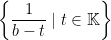
 such that
  Thus
Thus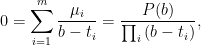
![{P\in\mathbb{K}[z]}](https://s0.wp.com/latex.php?latex=%7BP%5Cin%5Cmathbb%7BK%7D%5Bz%5D%7D&bg=ffffff&fg=000000&s=0&c=20201002) and
and  . As
. As  is linear, i.e.
  maps
maps  to
to  , for
, for  . As
. As  , we see that
  , for
, for 
 ) to this one.
 Equatorial Mathematics